5 Most Common Early Warning Signs Before a Migraine Starts

Most migraines don't appear out of nowhere. Hours — sometimes even a day or two — before the headache phase begins, your body sends subtle signals. These early warning signs, known as the prodrome phase, affect up to 77% of migraine sufferers.
Learning to recognize them can give you a crucial head start.
The migraine timeline can continue after the pain fades too. If you feel foggy or wiped out the next day, read our guide to migraine hangover and postdrome.
1. Mood and Energy Changes
One of the earliest signs is a shift in your mood or energy levels. You might feel unusually irritable, anxious, or even euphoric for no clear reason. Many people report a deep, unexplained fatigue that sets in 12–24 hours before the headache.
What to watch for: Sudden mood swings, irritability, depression, or hyperactivity that seems out of character.
2. Food Cravings
Intense cravings — especially for chocolate, salty snacks, or carbohydrates — are a well-documented prodrome symptom. For years, chocolate was blamed as a trigger, but research now suggests the craving itself is part of the prodrome. You're not causing the migraine by eating chocolate — your brain is already preparing for one.
What to watch for: Unusual or intense cravings, especially for sweet or salty foods.
3. Neck Stiffness
A stiff or tense neck is one of the most commonly reported warning signs. The tension often starts at the base of the skull and radiates down into the shoulders. This is more than regular tension from sitting at a desk — it's a deep, persistent stiffness.
What to watch for: Unusual neck tension or stiffness, especially on one side, that doesn't resolve with stretching.
4. Increased Sensitivity
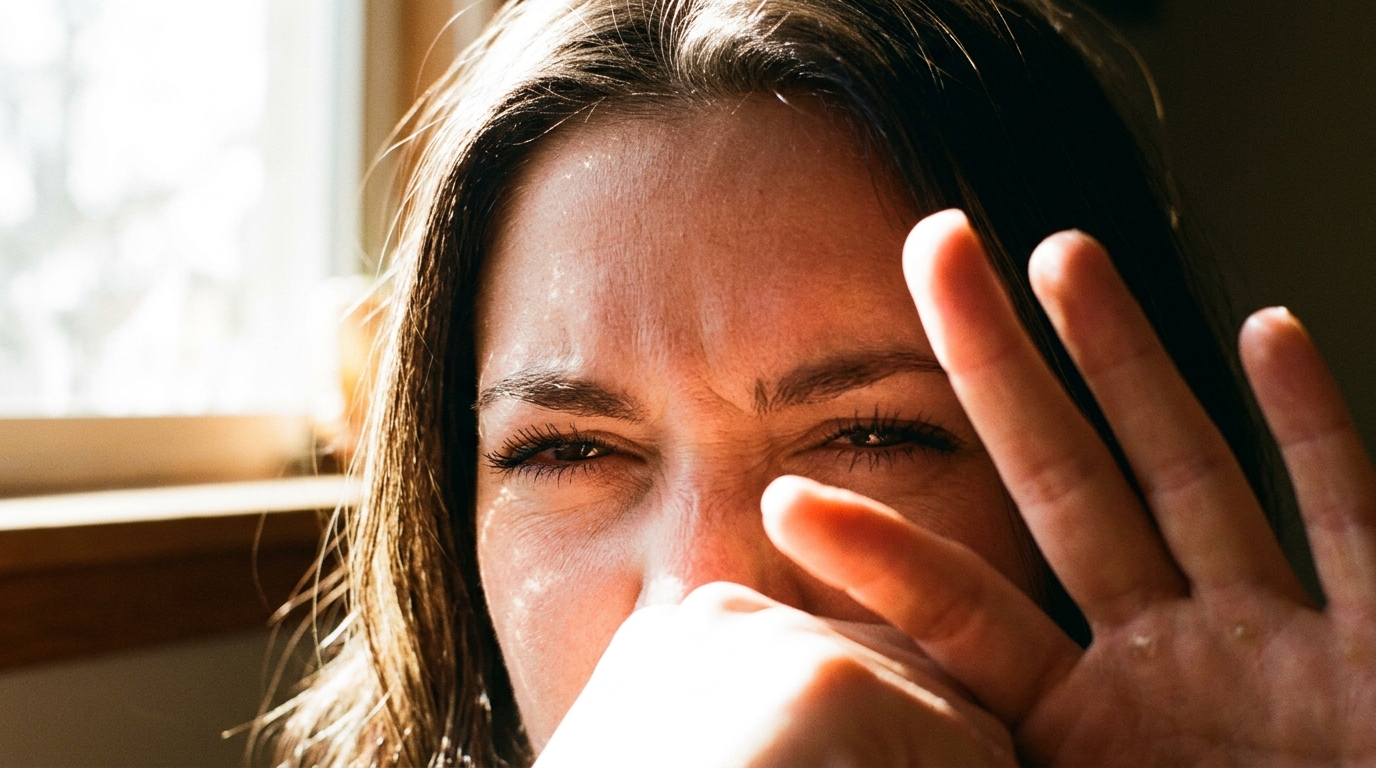
Before a migraine, your senses may become heightened. Lights seem brighter, sounds feel louder, and certain smells become overwhelming. This sensory sensitivity can begin hours before pain starts.
What to watch for: Being unusually bothered by normal light levels, everyday sounds, or routine smells.
5. Visual and Sensory Aura
About 25–30% of migraine sufferers experience aura, typically 20–60 minutes before headache onset. Visual aura is most common — you might see zigzag lines, shimmering spots, blind spots, or flashing lights. Some people experience tingling in their hands or face, or difficulty finding words.
What to watch for: Any new visual disturbances, numbness, tingling, or speech difficulties.

What You Can Do
Recognizing your personal warning signs is the first step. Once you know your prodrome pattern, you can:
- Take acute medication early — many medications work best when taken at the first sign of a migraine
- Hydrate and eat — dehydration and low blood sugar can worsen an incoming attack
- Reduce stimulation — dim lights, lower volume, step away from screens
- Log it — tracking your prodrome symptoms in Claru helps the AI identify your unique early warning pattern
The more consistently you track these early signs, the better Claru can predict your next migraine — sometimes before you even notice the symptoms yourself.
Sources: American Migraine Foundation, Migraine Research Foundation, Giffin et al. (2003) "The premonitory phase of migraine," Neurology.