Sleep, Hormones & Migraines: What the Science Says

Sleep and hormones are two of the most powerful — and most interconnected — factors in migraine. Disrupting either one can trigger an attack, and they often compound each other. Understanding these relationships is essential for effective migraine management.
Sleep and Migraines: A Two-Way Street
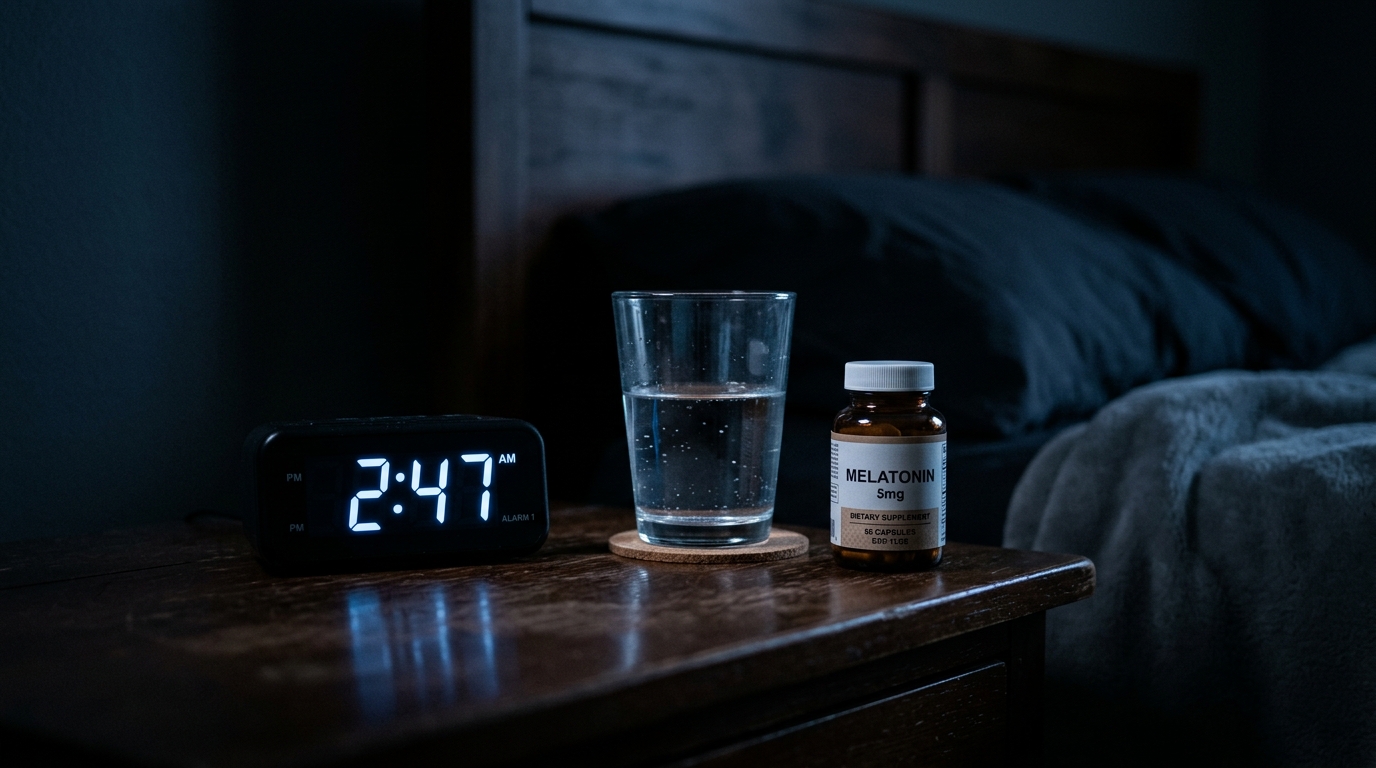
The relationship between sleep and migraines is bidirectional: poor sleep triggers migraines, and migraines disrupt sleep. This creates a cycle that can be difficult to break without intervention.
Too little sleep
Sleep deprivation is one of the most consistently reported migraine triggers. A study in the journal Headache found that people who slept fewer than 6 hours were significantly more likely to have more frequent and more severe migraines.
When you don't get enough sleep, your body:
- Produces more stress hormones (cortisol)
- Has lower pain thresholds
- Experiences increased inflammation
- Struggles to regulate serotonin — a key neurotransmitter in migraine
Too much sleep
Here's the counterintuitive part: sleeping too much can also trigger migraines. "Weekend migraines" are a well-known pattern — you catch up on sleep Saturday morning and wake up with a headache. The likely culprits are changes in caffeine timing, delayed meals, and disruption of your circadian rhythm.
Sleep disorders
Conditions like sleep apnea, insomnia, and restless leg syndrome are all more common in migraine sufferers. Treating the underlying sleep disorder often reduces migraine frequency significantly.
The Hormonal Connection
Hormones play a massive role in migraine — and this is a major reason why migraines affect women three times more than men.
Estrogen and migraine
The primary hormonal driver is estrogen. Specifically, it's the drop in estrogen that triggers migraines, not the absolute level. This is why migraines commonly occur:
- Just before or during menstruation — when estrogen drops sharply (menstrual migraine affects about 60% of women with migraine)
- During perimenopause — when estrogen levels fluctuate unpredictably
- When stopping hormonal birth control — during the placebo/break week
Conversely, many women find that migraines improve during pregnancy (when estrogen levels are consistently high) and after menopause (when fluctuations stop).
Other hormones
- Cortisol (stress hormone) — chronic stress keeps cortisol elevated, which increases inflammation and lowers pain thresholds
- Melatonin — migraine sufferers often have lower melatonin levels, which may explain the sleep-migraine connection
- Serotonin — drops in serotonin trigger the trigeminal nerve, which is directly involved in migraine pain
The Circadian Rhythm Connection
Your circadian rhythm — your body's internal 24-hour clock — regulates sleep, hormones, body temperature, and many other functions. Disrupting it can trigger migraines through multiple pathways at once.
Common circadian disruptions that trigger migraines:
- Shift work — alternating between day and night shifts
- Jet lag — crossing time zones
- Irregular sleep schedule — different sleep/wake times on weekdays vs. weekends
- Daylight saving time changes — even a one-hour shift can be enough
Research published in Neurology found that the hypothalamus — the brain region that controls the circadian rhythm — is activated at the very beginning of a migraine attack, before pain even starts.

Practical Tips
For better sleep
- Keep a consistent schedule — same bedtime and wake time every day, including weekends
- Create a dark, cool environment — optimal sleep temperature is 60-67°F (15-19°C)
- Avoid screens for 30+ minutes before bed — blue light suppresses melatonin production
- Limit caffeine after noon — caffeine's half-life is 5-6 hours
- Track your sleep — logging sleep in Claru helps the AI identify how your sleep patterns relate to migraine risk
For hormonal migraines
- Track your cycle — logging menstrual patterns alongside migraines reveals the correlation
- Talk to your doctor — hormonal treatments (continuous birth control, estrogen patches) can stabilize levels during high-risk periods
- Consider timed prevention — some doctors recommend preventive medication specifically around menstruation
- Stay consistent — regular meals, sleep, and exercise help buffer against hormonal fluctuations
The tracking advantage
The connection between sleep, hormones, and migraines is deeply personal. What matters isn't the general science — it's your specific pattern. By consistently tracking sleep, hormonal cycles, and migraine occurrence in Claru, you give the AI the data it needs to identify your unique risk factors and timing patterns.
Many Claru users discover that their migraines aren't caused by a single factor, but by combinations — like poor sleep + the luteal phase, or irregular schedule + high stress. These multi-variable patterns are nearly impossible to spot without systematic tracking and AI analysis.
Sources: American Migraine Foundation, Kelman & Rains (2005) "Headache and sleep," Headache; MacGregor (2004) "Oestrogen and attacks of migraine with and without aura," The Lancet Neurology; May & Burstein (2019) "Hypothalamic regulation of headache and migraine," Cephalalgia.