Menstrual Migraine: Patterns, Prevention, and Treatment
By the Claru Editorial Team
This educational article has not been independently medically reviewed. It cannot diagnose a condition or replace care from a qualified healthcare professional.

Like clockwork. Two days before your period, the migraine arrives. You've come to expect it — the throbbing, the nausea, the lost day or two every single month. And you've probably wondered: why does my cycle have this much power over my head?
Changes in estrogen around the start of a period are one recognized influence on migraine. The relationship is not identical for everyone, and tracking the timing can help you and a clinician assess whether a menstrual pattern is plausible.
About 60% of women who have migraines report a clear connection to their menstrual cycle, according to the American Migraine Foundation. For some, period migraines are their only migraines. For others, they're the worst ones in a broader pattern.
Treatment and prevention options exist, but the right choice depends on your health history, other medications, pregnancy plans, and whether you experience aura. This guide is for education and preparation for a clinical conversation, not a dosing plan.
Why Your Period Triggers Migraines
Throughout your menstrual cycle, estrogen levels rise and fall in a predictable pattern. After ovulation (around day 14), estrogen drops. Then it briefly rises again before plummeting sharply in the 2-3 days before your period starts.
That estrogen decline is associated with attacks in some people. It is not the only possible factor, and it should not be treated as proof of the cause of an individual headache.
Here's what happens biologically:
Serotonin drops with estrogen. Estrogen helps regulate serotonin, a neurotransmitter that modulates pain and mood. When estrogen drops, serotonin follows — and lower serotonin means a lower pain threshold and more vulnerability to migraine triggers.
Prostaglandins surge. In the days before and during your period, your body produces prostaglandins — inflammatory chemicals that cause uterine contractions (cramps). These same prostaglandins can trigger headaches and increase pain sensitivity.
CGRP sensitivity increases. Calcitonin gene-related peptide (CGRP) — the protein most directly involved in migraine pain — becomes more active when estrogen is low. This is partly why the newer CGRP-blocking medications work well for menstrual migraine.
The Two Types of Menstrual Migraine
The International Headache Society distinguishes between two patterns:
Pure Menstrual Migraine
Migraines occur exclusively in the perimenstrual window (day -2 to day +3 of your cycle, where day 1 is the first day of bleeding) and at no other time. This affects about 7-10% of women with migraine.
Menstrually Related Migraine
Migraines occur during the perimenstrual window AND at other times during the cycle. This is much more common — affecting about 50-60% of women with migraine.
The distinction matters for treatment because pure menstrual migraine is more predictable and responds particularly well to timed preventive strategies.
How to Confirm the Pattern
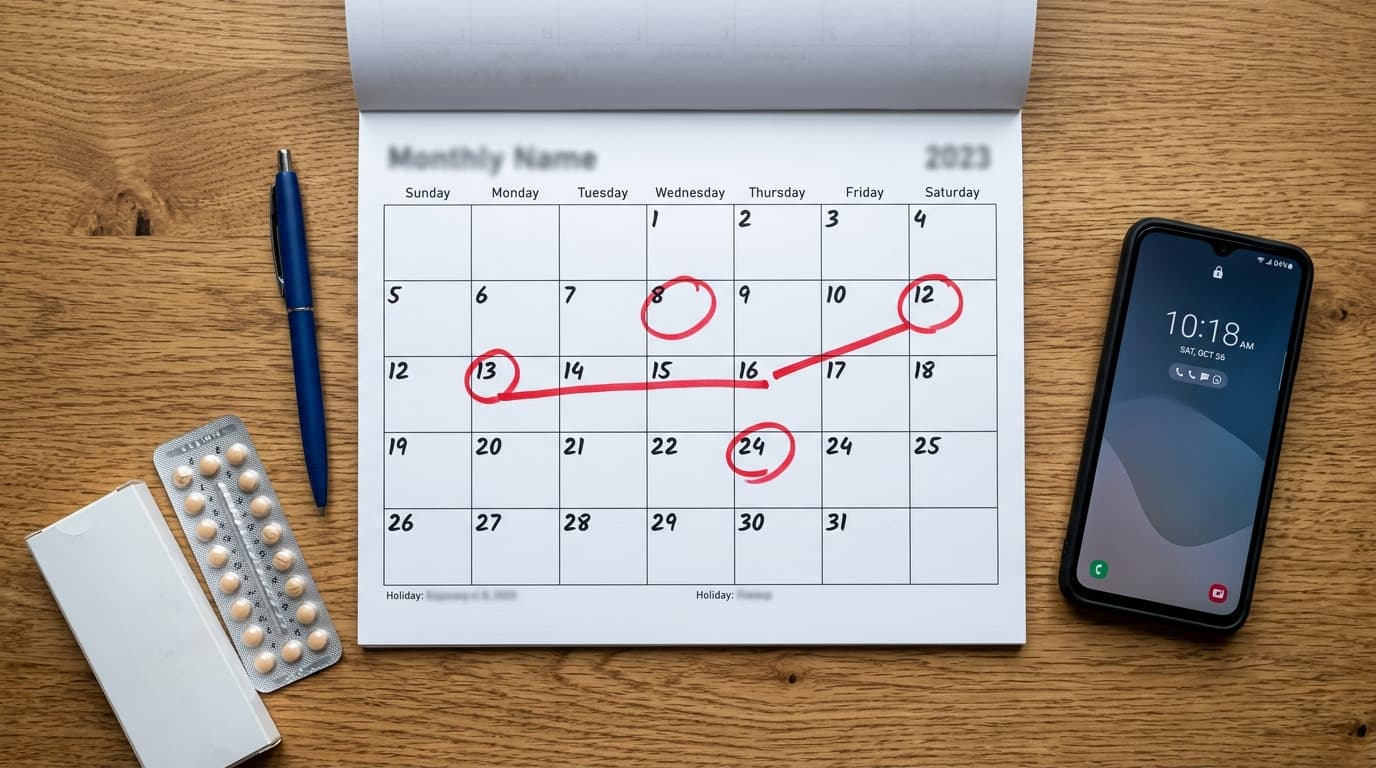
You might feel certain your migraines are period-related, but a diary can provide more useful evidence for a clinician to review:
Track your migraines and your cycle for at least 3 consecutive months. For each migraine, note which cycle day it falls on (day 1 = first day of bleeding). Repeated attacks in the day -2 to day +3 window can support a clinician's assessment, but a diary alone does not confirm a diagnosis.
This can be useful to track in Claru. Log your period start date and migraine entries so you can review whether the timing repeats across several cycles and share the record with a clinician.
Treatment: Stopping the Attack
When a menstrual migraine hits, the treatment options are mostly the same as for other migraines — but some work better for hormonally triggered attacks.
Anti-inflammatory medicines
A clinician or pharmacist may recommend an NSAID for some people. These medicines are not appropriate for everyone and can interact with other medicines or conditions, so follow the product label and individualized medical advice rather than a generic online dosing schedule.
Triptans
Triptans are prescription migraine medicines that a clinician may consider for acute treatment or timed prevention. The specific medicine, timing, and maximum dose need to follow the prescription written for you.
CGRP Antagonists
Gepant medicines such as ubrogepant and rimegepant affect the CGRP pathway and may be considered in some treatment plans. Ask a qualified clinician whether they are appropriate for you.
Prevention: Getting Ahead of It
When attacks occur in a repeatable cycle window, a clinician may consider short-term prevention during that window rather than daily preventive medication.
Mini-Prevention With Frovatriptan
Frovatriptan is one prescription option that has been studied for short-term prevention. A clinician must decide whether it is safe for you and provide the exact timing and dose.
Mini-Prevention With Naproxen
Naproxen is another option sometimes discussed for short-term prevention. Over-the-counter availability does not make it safe for everyone; ask a clinician or pharmacist about suitability, interactions, timing, and dose.
Mini-Prevention With Magnesium
Magnesium has been studied for migraine prevention, but evidence and recommended formulations vary. Discuss supplements with a clinician or pharmacist, especially if you have kidney disease, are pregnant, or take other medicines.
Hormonal Approaches
The goal of hormonal prevention is to eliminate or minimize the estrogen drop that triggers the migraine:
Continuous hormonal contraception. A clinician may consider reducing hormone-free intervals for some patients, depending on medical history and migraine type.
Estrogen supplementation. In selected cases, a clinician may discuss short-term estrogen supplementation around the expected cycle window.
Adjusting the hormone-free interval. Any change to contraception or added estrogen should be directed by a qualified prescriber.
Important note: Hormonal approaches should be discussed with your doctor, especially if you have migraine with aura. Migraine with aura + combined hormonal contraceptives carries an increased stroke risk, and alternative approaches may be recommended.
Daily Prevention (For Severe or Frequent Cases)
If mini-prevention isn't enough, daily preventive medications may be warranted:
- CGRP monoclonal antibodies (erenumab, fremanezumab, galcanezumab) — monthly or quarterly injections that reduce migraine frequency overall, including menstrual attacks
- Beta-blockers — propranolol or metoprolol
- Anticonvulsants — topiramate
- Antidepressants — amitriptyline or venlafaxine

Lifestyle Factors Worth Tracking
Medications are one part of the picture. These lifestyle factors can lower your baseline migraine threshold, making you less vulnerable when the estrogen drop comes:
Sleep consistently. Sleep changes may add to an individual's migraine susceptibility. Aim for a regular schedule that is realistic for you.
Stay hydrated. Fluid retention before your period can mask dehydration. Drink extra water starting a few days before.
Record possible triggers in context. If you suspect a food or routine factor, track it alongside headache-free days instead of making a broad restrictive change based on one episode. Review major dietary changes with a clinician or dietitian.
Reduce stress. Easier said than done, but stress compounds the hormonal trigger. Even 10 minutes of deep breathing or a short walk can make a difference.
Exercise regularly. Regular aerobic exercise (150 minutes per week) has been shown to reduce migraine frequency overall. But don't start an intense new routine right before your period — sudden exertion can be a trigger.
Menstrual Migraine Through Life Stages
Puberty
Menstrual migraines often start with the first menstrual periods. They may take a few years to establish a clear pattern.
Reproductive Years
This is typically when menstrual migraines are most consistent and predictable. Birth control choices can significantly impact the pattern — for better or worse.
Perimenopause
Often the worst phase. Estrogen fluctuations become unpredictable and extreme, and migraines may increase in frequency and severity. Hormone replacement therapy can help stabilize things.
Menopause
For most women, migraines improve significantly after menopause because the hormonal fluctuations stop. The transition through perimenopause is the rough part — the other side is usually better.
Track Your Cycle-Migraine Connection
The single most powerful thing you can do for menstrual migraine is consistent tracking. When you can predict your high-risk days with confidence, you can:
- Start mini-prevention at exactly the right time
- Adjust your schedule (avoid demanding commitments on predicted migraine days)
- Tighten your trigger avoidance during the vulnerable window
- Show your doctor a clear pattern that guides treatment decisions
Claru makes this seamless. Log your period and your migraines, and the AI maps the relationship across cycles. After 2-3 months, it predicts your high-risk days in advance — so you can prepare instead of react.
Track your menstrual migraines with Claru — free download
Sources: American Migraine Foundation, Cleveland Clinic, Mayo Clinic, The Migraine Trust, National Headache Foundation, Jefferson Health.