Menstrual Migraine: Patterns, Prevention, and Treatment

Like clockwork. Two days before your period, the migraine arrives. You've come to expect it — the throbbing, the nausea, the lost day or two every single month. And you've probably wondered: why does my cycle have this much power over my head?
The answer is estrogen. Specifically, the drop in estrogen that happens right before your period begins. And once you understand this mechanism, you can actually get ahead of it instead of reacting to it every month.
About 60% of women who have migraines report a clear connection to their menstrual cycle, according to the American Migraine Foundation. For some, period migraines are their only migraines. For others, they're the worst ones in a broader pattern.
Either way, menstrual migraines are treatable and, in many cases, preventable. Here's how.
Why Your Period Triggers Migraines
Throughout your menstrual cycle, estrogen levels rise and fall in a predictable pattern. After ovulation (around day 14), estrogen drops. Then it briefly rises again before plummeting sharply in the 2-3 days before your period starts.
That sharp estrogen drop is the trigger. It's not about having high or low estrogen — it's the rate of decline that matters. A slow, gradual decrease is usually tolerable. A rapid drop triggers the migraine cascade.
Here's what happens biologically:
Serotonin drops with estrogen. Estrogen helps regulate serotonin, a neurotransmitter that modulates pain and mood. When estrogen drops, serotonin follows — and lower serotonin means a lower pain threshold and more vulnerability to migraine triggers.
Prostaglandins surge. In the days before and during your period, your body produces prostaglandins — inflammatory chemicals that cause uterine contractions (cramps). These same prostaglandins can trigger headaches and increase pain sensitivity.
CGRP sensitivity increases. Calcitonin gene-related peptide (CGRP) — the protein most directly involved in migraine pain — becomes more active when estrogen is low. This is partly why the newer CGRP-blocking medications work well for menstrual migraine.
The Two Types of Menstrual Migraine
The International Headache Society distinguishes between two patterns:
Pure Menstrual Migraine
Migraines occur exclusively in the perimenstrual window (day -2 to day +3 of your cycle, where day 1 is the first day of bleeding) and at no other time. This affects about 7-10% of women with migraine.
Menstrually Related Migraine
Migraines occur during the perimenstrual window AND at other times during the cycle. This is much more common — affecting about 50-60% of women with migraine.
The distinction matters for treatment because pure menstrual migraine is more predictable and responds particularly well to timed preventive strategies.
How to Confirm the Pattern
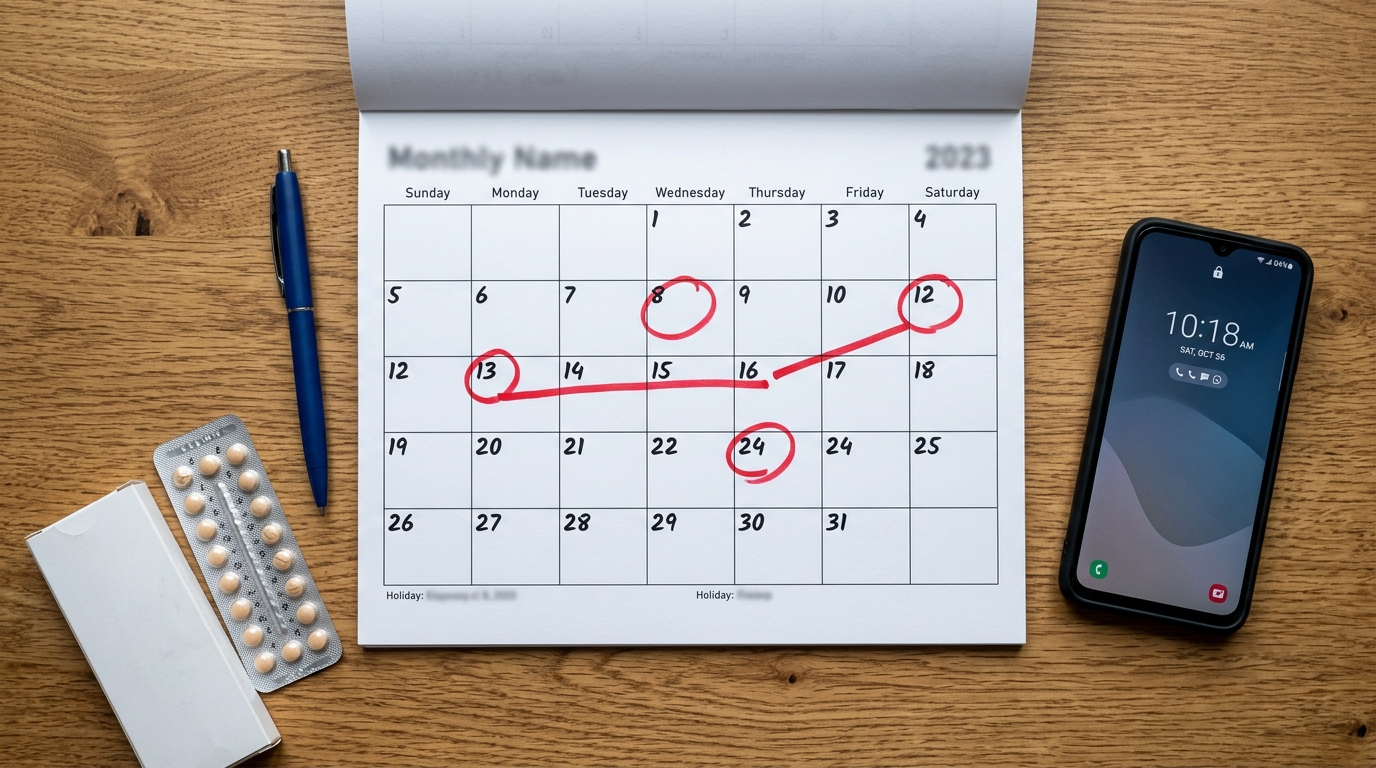
You might feel certain your migraines are period-related, but confirming the pattern with data takes the guesswork out. Here's the test:
Track your migraines and your cycle for at least 3 consecutive months. For each migraine, note which cycle day it falls on (day 1 = first day of period). If at least 2 out of 3 months show migraines occurring between day -2 and day +3, you have a confirmed menstrual migraine pattern.
This is one of the most valuable things you can track in Claru. Log your period start date and your migraines, and the app maps them against each other automatically. After 2-3 cycles, the correlation (or lack of one) becomes clear.
Treatment: Stopping the Attack
When a menstrual migraine hits, the treatment options are mostly the same as for other migraines — but some work better for hormonally triggered attacks.
First Line: NSAIDs
Naproxen sodium (Aleve) is particularly effective for menstrual migraine because it tackles both the headache and the prostaglandin component. Take 550mg at the first sign of the migraine, then 275mg every 8-12 hours as needed.
Mefenamic acid (Ponstel) is a prescription NSAID specifically effective against prostaglandin-mediated pain. Some doctors prescribe it specifically for menstrual migraines.
Triptans
Triptans work well for menstrual migraines, though these migraines tend to be more resistant to treatment and more likely to recur within 24 hours compared to non-menstrual attacks. If your first triptan dose wears off, a second dose is often needed.
Frovatriptan has the longest half-life of the triptans and is specifically studied for menstrual migraine prevention (more on that below).
CGRP Antagonists
The newer gepant medications (ubrogepant, rimegepant) work by blocking CGRP — the protein that becomes more active when estrogen drops. They're particularly well-suited for menstrual migraine because they target the specific mechanism involved.
Prevention: Getting Ahead of It
Because menstrual migraines are predictable (they come at the same point in your cycle every month), you can use mini-prevention — taking preventive medication only during the high-risk window rather than every day.
Mini-Prevention With Frovatriptan
Take frovatriptan 2.5mg twice daily, starting 2 days before your expected period and continuing through day 3 of bleeding. Studies show this reduces menstrual migraine incidence by 50-70%. Your doctor needs to prescribe this.
Mini-Prevention With Naproxen
Take naproxen 550mg twice daily during the same perimenstrual window (day -2 through day +3). This is available over the counter and is a good first-line option.
Mini-Prevention With Magnesium
Start magnesium supplementation (400-600mg daily) on day 15 of your cycle and continue through the end of your period. Some studies show this reduces both frequency and severity of menstrual migraines.
Hormonal Approaches
The goal of hormonal prevention is to eliminate or minimize the estrogen drop that triggers the migraine:
Continuous birth control pills. Taking combined oral contraceptives continuously (skipping the placebo week) maintains stable estrogen levels and prevents the perimenstrual drop. Many women see dramatic improvement with this approach.
Estrogen supplementation during the drop. If you're not on hormonal birth control, using a supplemental estrogen patch or gel during the perimenstrual window can buffer the estrogen decline. Typically, an estrogen patch (100mcg) applied 2-3 days before your period and worn for 7 days.
Low-dose estrogen pills. During the placebo week of regular birth control, taking a low-dose estrogen supplement can prevent the withdrawal headache.
Important note: Hormonal approaches should be discussed with your doctor, especially if you have migraine with aura. Migraine with aura + combined hormonal contraceptives carries an increased stroke risk, and alternative approaches may be recommended.
Daily Prevention (For Severe or Frequent Cases)
If mini-prevention isn't enough, daily preventive medications may be warranted:
- CGRP monoclonal antibodies (erenumab, fremanezumab, galcanezumab) — monthly or quarterly injections that reduce migraine frequency overall, including menstrual attacks
- Beta-blockers — propranolol or metoprolol
- Anticonvulsants — topiramate
- Antidepressants — amitriptyline or venlafaxine

Lifestyle Strategies That Actually Help
Medications are one part of the picture. These lifestyle factors can lower your baseline migraine threshold, making you less vulnerable when the estrogen drop comes:
Sleep consistently. Your body is already dealing with hormonal stress during the perimenstrual window. Adding sleep deprivation on top makes a migraine almost inevitable. Prioritize 7-8 hours in the days before your period.
Stay hydrated. Fluid retention before your period can mask dehydration. Drink extra water starting a few days before.
Avoid your known triggers. This is not the week to have red wine and aged cheese. If you know your food triggers, avoid them during the high-risk window. The combination of hormonal sensitivity + food triggers is where many menstrual migraines come from.
Reduce stress. Easier said than done, but stress compounds the hormonal trigger. Even 10 minutes of deep breathing or a short walk can make a difference.
Exercise regularly. Regular aerobic exercise (150 minutes per week) has been shown to reduce migraine frequency overall. But don't start an intense new routine right before your period — sudden exertion can be a trigger.
Menstrual Migraine Through Life Stages
Puberty
Menstrual migraines often start with the first menstrual periods. They may take a few years to establish a clear pattern.
Reproductive Years
This is typically when menstrual migraines are most consistent and predictable. Birth control choices can significantly impact the pattern — for better or worse.
Perimenopause
Often the worst phase. Estrogen fluctuations become unpredictable and extreme, and migraines may increase in frequency and severity. Hormone replacement therapy can help stabilize things.
Menopause
For most women, migraines improve significantly after menopause because the hormonal fluctuations stop. The transition through perimenopause is the rough part — the other side is usually better.
Track Your Cycle-Migraine Connection
The single most powerful thing you can do for menstrual migraine is consistent tracking. When you can predict your high-risk days with confidence, you can:
- Start mini-prevention at exactly the right time
- Adjust your schedule (avoid demanding commitments on predicted migraine days)
- Tighten your trigger avoidance during the vulnerable window
- Show your doctor a clear pattern that guides treatment decisions
Claru makes this seamless. Log your period and your migraines, and the AI maps the relationship across cycles. After 2-3 months, it predicts your high-risk days in advance — so you can prepare instead of react.
Track your menstrual migraines with Claru — free download
Sources: American Migraine Foundation, Cleveland Clinic, Mayo Clinic, The Migraine Trust, National Headache Foundation, Jefferson Health.