Migraine Aura: A Visual Guide to Symptoms, Types, and Stages
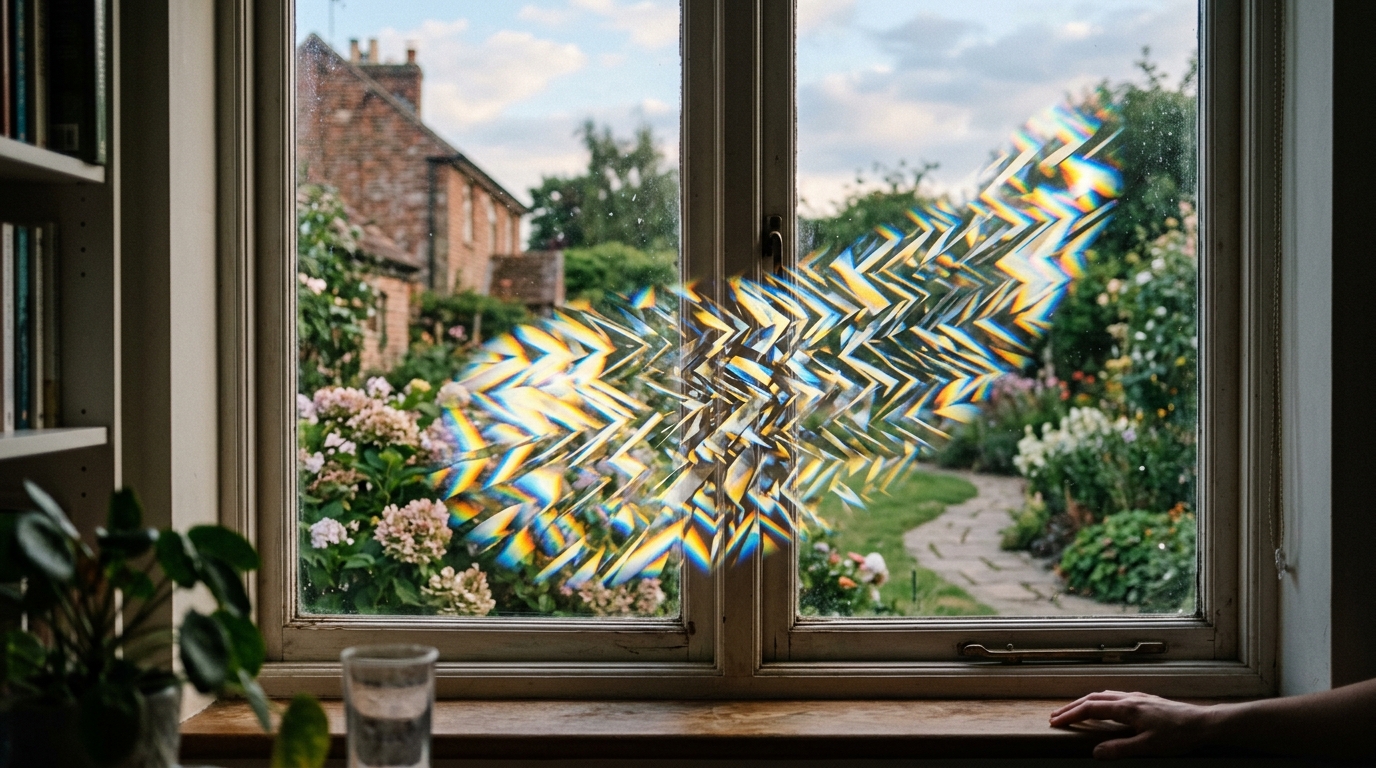
It starts with something small. A shimmering spot in your vision. A flicker in your peripheral field. Then the spot grows — expanding into a jagged arc of zigzag lines that slowly drifts across everything you see.
If you've experienced this, you know how unsettling it is. Especially the first time, when you have no idea what's happening and wonder if you're having a stroke or losing your vision permanently.
You're not. It's migraine aura — and roughly 25-30% of people with migraines experience it, according to the American Migraine Foundation. The visual disturbances are dramatic, but they're temporary and they don't damage your eyes or brain.
Here's what's actually going on, what the different types look like, and what you can do when aura strikes.
Sometimes aura happens without the headache phase. If that is your pattern, read the guide to silent migraine aura without headache.
What Causes Migraine Aura
Aura isn't happening in your eyes. It's happening in your brain.
The cause is a phenomenon called cortical spreading depression (CSD) — a wave of intense electrical activity that sweeps slowly across the surface of your brain's cortex, followed by a period of reduced activity. Picture dropping a stone in a pond: the ripple spreads outward in all directions. CSD does the same thing across your brain tissue.
This wave moves at about 3-5 millimeters per minute — which is why aura symptoms develop gradually rather than appearing all at once. As the wave crosses different brain regions, it produces symptoms specific to that region:
- When it crosses the visual cortex → you see visual disturbances
- When it crosses the sensory cortex → you feel tingling or numbness
- When it crosses language areas → you have trouble speaking or finding words
- When it crosses the motor cortex → you experience weakness (this is hemiplegic migraine)
After CSD passes through an area, that brain tissue is temporarily suppressed — which is why you might have a brief blind spot where the visual disturbance was, or residual numbness after the tingling fades.
Types of Migraine Aura
Not everyone gets the same aura. There are several distinct types, and you may experience one or a combination.
Visual Aura (Most Common — ~90% of Aura Cases)
Visual aura is by far the most common type. The disturbances typically start near the center of your vision and expand outward over 5-30 minutes.
Common visual aura patterns:
Scintillating scotoma — The "classic" migraine aura. A small blind spot appears near the center of your vision, surrounded by a border of shimmering, zigzag lines (called fortification spectra because they resemble the walls of a medieval fortress). This arc expands outward in a C or horseshoe shape over 20-30 minutes, then fades.
Flickering or flashing lights — Bright flashes of white or colored light, sometimes described as "fireworks" or "strobe lights" in your peripheral vision.
Shimmering or heat-wave effect — Parts of your visual field look like looking through a heat haze rising off hot pavement. The distortion can make it hard to read or recognize faces.
Blind spots (scotomas) — Dark or blank areas in your visual field. These can be small dots or larger patches. Sometimes they're preceded by shimmering, sometimes they appear on their own.
Tunnel vision — A gradual narrowing of your peripheral vision, as if looking through a tube.
Kaleidoscope vision — Fragmented, geometric patterns that rotate or shift, similar to looking through a kaleidoscope.
Sensory Aura
About 30-40% of people who get aura experience sensory symptoms, either alone or alongside visual aura. The most common pattern:
- Tingling or "pins and needles" starts in the fingertips of one hand
- Over 10-20 minutes, it slowly spreads up the hand, then the arm
- It may spread to the same side of the face, especially around the mouth and tongue
- After tingling, the area may feel numb
- Always one-sided — it affects the right or left side, not both
The slow march of the tingling — hand to arm to face — follows the wave of CSD across the sensory cortex. Each body part is represented by a specific strip of brain tissue, and as the wave crosses each strip, you feel the tingling in the corresponding area.
Speech and Language Aura (Dysphasic Aura)
Less common but distinctly unsettling. During dysphasic aura:
- You have trouble finding the right words
- You know what you want to say but can't get it out
- You may slur words or produce jumbled speech
- Reading becomes difficult or impossible
- Usually lasts 15-30 minutes
This happens when CSD reaches the language centers of the brain (Broca's area and Wernicke's area, typically in the left hemisphere).
Retinal Aura (Rare)
Unlike typical visual aura, which affects both eyes, retinal aura affects only one eye. You might notice:
- Flickering light in one eye
- A blind spot or complete temporary vision loss in one eye
- Lasts less than 60 minutes
This is caused by vasospasm (blood vessel spasm) in the retinal blood vessels, not by CSD. If you experience vision loss in one eye, see an ophthalmologist — it needs to be distinguished from other conditions affecting the eye's blood supply.
The Four Stages of a Migraine With Aura
A migraine with aura follows a predictable sequence. Not everyone experiences all four stages, but understanding them helps you know where you are in an attack.
Stage 1: Prodrome (Hours to Days Before)
Subtle warning signs that a migraine is coming. You might feel unusually tired, irritable, or crave specific foods. Neck stiffness is common. This phase can start 24-48 hours before the aura.
We covered this phase in detail in our guide on early warning signs before a migraine.
Stage 2: Aura (5-60 Minutes Before Headache)
The visual, sensory, or speech symptoms described above. The International Headache Society defines aura as lasting 5-60 minutes. Most auras last 20-30 minutes. Symptoms develop gradually — a key distinction from stroke, where symptoms appear suddenly.
Important timing fact: The aura usually ends before or as the headache begins. There's often a brief "gap" of 10-20 minutes between aura resolution and headache onset. This gap is your intervention window — take your acute medication during this time for best results.
Stage 3: Headache (4-72 Hours)
The headache phase typically follows the aura, though for some people aura occurs without a subsequent headache (more on that below). The headache is usually:
- One-sided (but can be bilateral)
- Throbbing or pulsating
- Moderate to severe
- Worsened by physical activity
- Accompanied by nausea and/or sensitivity to light and sound
Stage 4: Postdrome (Hours to Days After)
The "migraine hangover." You might feel drained, foggy, or mildly confused for hours or even a day after the headache resolves. Some people describe it as feeling like their brain was "wrung out."
Aura Without Headache — Yes, It's a Thing
Some people experience the full aura — visual disturbances, tingling, the whole show — but no headache follows. This is called "typical aura without headache" or sometimes "acephalgic migraine" (acephalgic = without head pain).
It's more common in:
- People over 40 who previously had migraine with aura (the headache component can fade with age while the aura persists)
- People with a strong family history of migraine
If you're experiencing new visual disturbances without headache, especially for the first time, see a doctor. Aura without headache is benign, but the symptoms need to be distinguished from TIA (transient ischemic attack, or "mini-stroke"), which can look similar but has very different implications.
What to Do When Aura Starts
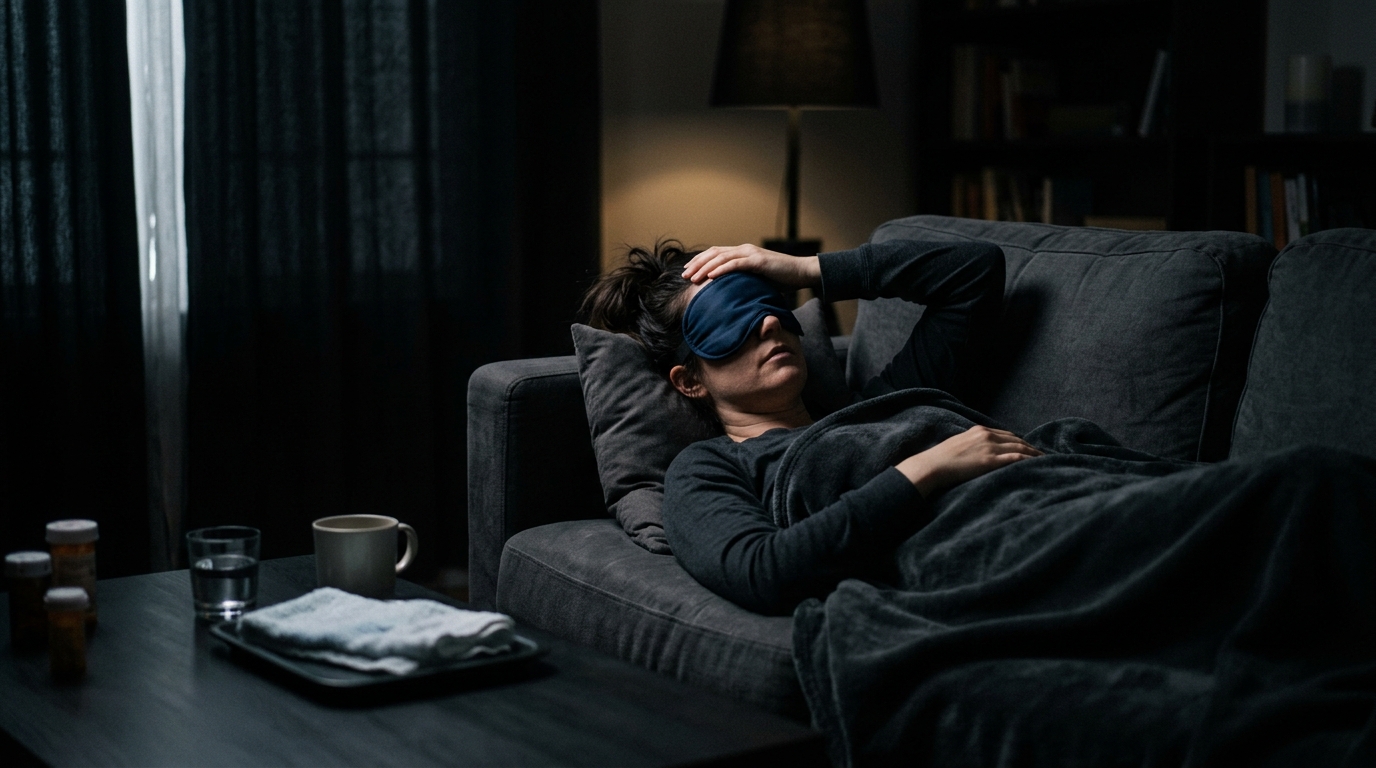
Once aura begins, you have a window of about 20-60 minutes before the headache phase hits. Here's how to use that time:
1. Take Your Medication Early
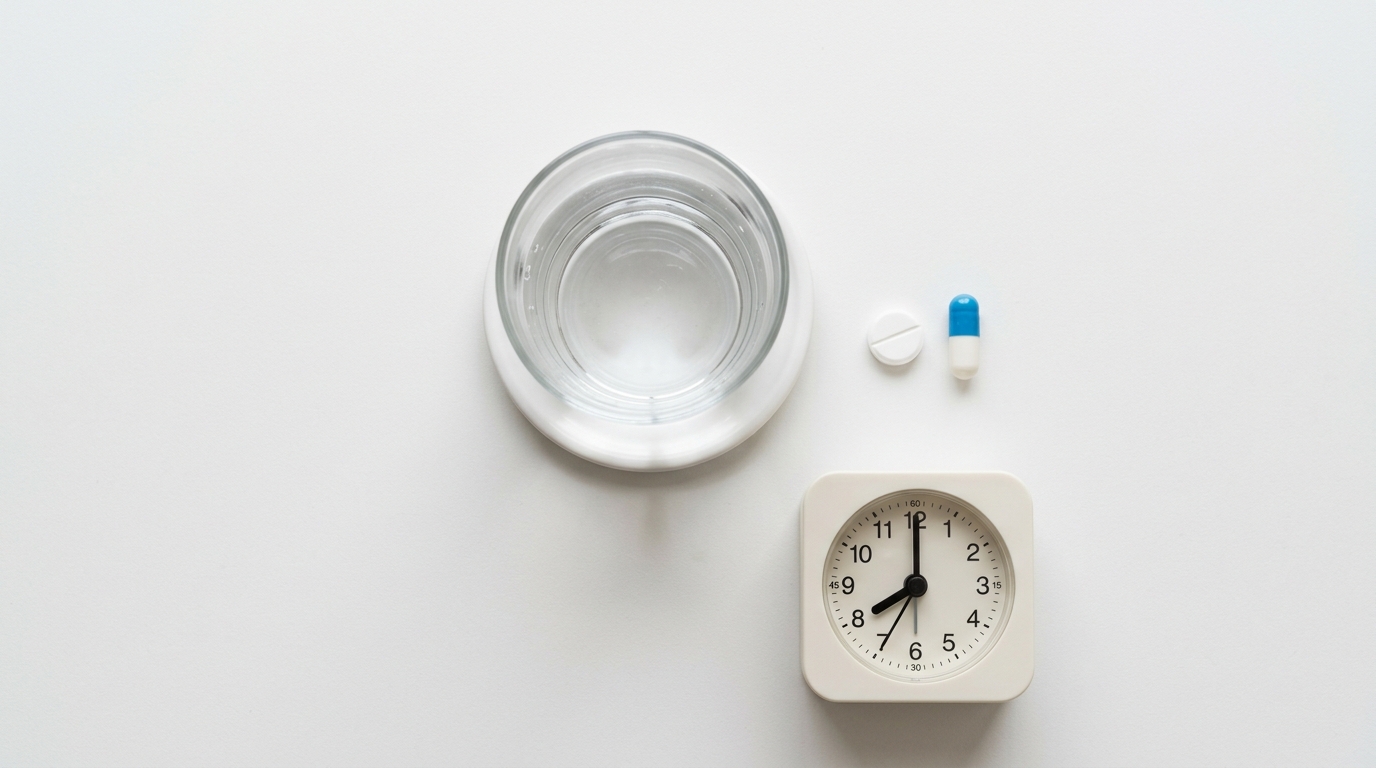
If you have prescription migraine medication (triptans, gepants, ditans), take it during or immediately after the aura phase. The evidence is clear: early treatment is significantly more effective than waiting until the headache is severe.
For triptans specifically, some research suggests waiting until the aura resolves before taking the medication, as triptans may be less effective during active aura. Ask your neurologist about the best timing for your specific medication.
2. Hydrate
Drink a full glass of water. Dehydration lowers your migraine threshold, and you want every possible factor working in your favor.
3. Reduce Stimulation
If you can, move to a quiet, dim environment. The sensory sensitivity that comes with migraine means that bright lights and loud sounds will amplify your pain once the headache phase starts.
4. Apply Cold
A cold compress on your forehead or the back of your neck during the aura phase can reduce the severity of the incoming headache. It constricts blood vessels and may slow the inflammatory cascade.
5. Have Caffeine (If Appropriate)
A small amount of caffeine (one cup of coffee) during early aura can help — caffeine constricts blood vessels and is a component of several migraine medications. But skip this if you've already had your daily caffeine or if caffeine is a trigger for you.
6. Log It
Record when the aura started, what symptoms appeared and in what order, and any potential triggers from the past 24-48 hours. This data is invaluable for your doctor and for identifying your personal trigger patterns.
Tracking Your Aura Patterns
Aura patterns are remarkably consistent for each person. Your aura probably looks and behaves the same way every time — the same visual pattern, the same progression, the same duration. That consistency is actually useful because it becomes a reliable early warning system.
By tracking your aura episodes in detail, you can learn:
- Your typical aura-to-headache window — how much time you have to act
- Which triggers precede aura attacks — are they different from your non-aura triggers?
- Whether your aura pattern is changing — important to report to your doctor
- How well your medication works when taken at different points during aura
Claru lets you log aura symptoms in real time — type, duration, and associated triggers — so you build a detailed picture of your aura pattern over time. That data helps both you and your neurologist make better treatment decisions.
Track your migraine aura patterns with Claru — free download
When Aura Symptoms Need Urgent Attention
Migraine aura is uncomfortable but not dangerous. However, some situations require immediate medical evaluation:
- Aura lasting longer than 60 minutes — could indicate migrainous infarction (a rare migraine-related stroke)
- New aura symptoms you've never had before — especially motor weakness or speech problems
- Aura on the same side as the headache — typically aura is on the opposite side; same-side aura needs investigation
- Sudden vision loss in one eye only — could indicate retinal artery occlusion
- Aura symptoms that don't fully resolve — residual symptoms after the attack should be evaluated
When in doubt, err on the side of caution. A quick doctor visit that confirms "just aura" is always preferable to ignoring something that needed attention.
Sources: American Migraine Foundation, Cleveland Clinic, Mayo Clinic, Brigham and Women's Hospital, The Migraine Trust, StatPearls (NIH).