Hemiplegic Migraine: Symptoms, Causes, and What You Should Do

Your arm goes weak. Your speech slurs. One side of your face feels numb. Every instinct screams stroke — but it's not. It's a hemiplegic migraine, and if you've never experienced one before, it's genuinely terrifying.
Hemiplegic migraine is one of the rarest and most dramatic types of migraine. It affects roughly 0.01% of the population, according to the National Organization for Rare Disorders. But for those who have it, the experience is unlike any other headache — because it comes with temporary paralysis.
Here's what you need to know about recognizing it, understanding what's happening in your brain, and managing it effectively.
What Makes Hemiplegic Migraine Different
Every migraine is more than "just a headache." But hemiplegic migraine takes it to another level. The defining feature is motor weakness on one side of the body — the word "hemiplegic" literally means one-sided paralysis.
This isn't subtle. People describe losing the ability to grip things, their arm going limp, one leg dragging, or half their face drooping. Combined with visual disturbances and speech problems, it closely mimics a stroke.
The key difference: hemiplegic migraine symptoms are temporary and fully reversible. They typically last anywhere from one hour to several days, though in rare cases they can persist for up to four weeks. A stroke causes permanent damage unless treated immediately.
But here's the critical point — you cannot tell the difference yourself in the moment. If you experience sudden one-sided weakness for the first time, treat it as a stroke until proven otherwise. Call 911. Every time. A doctor can determine whether it's a hemiplegic migraine or a stroke, but you shouldn't try to make that call on your own.
Symptoms: The Full Picture
Hemiplegic migraine symptoms usually develop during the aura phase — before the headache pain starts. They unfold gradually over 20-30 minutes (unlike a stroke, which hits suddenly).
Motor Symptoms (The Defining Feature)
- Weakness or paralysis on one side of the body
- Difficulty gripping objects or lifting your arm
- Leg weakness or dragging on one side
- Facial drooping on one side
Visual Aura
- Zigzag lines, shimmering spots, or flashing lights
- Blind spots or partial vision loss
- Visual disturbances typically in both eyes
Sensory Symptoms
- Tingling or numbness, usually starting in the hand and spreading up the arm
- "Pins and needles" sensation on one side of the face
- Numbness that migrates across one side of the body
Speech and Language
- Slurred speech (dysarthria)
- Difficulty finding the right words (aphasia)
- Confusion or trouble understanding what others are saying
Other Possible Symptoms
- Severe, throbbing headache (usually follows the aura symptoms)
- Nausea and vomiting
- Extreme sensitivity to light and sound
- In rare, severe cases: fever, drowsiness, or impaired consciousness
The timeline matters. In hemiplegic migraine, symptoms typically develop one after another over minutes — weakness might start in the hand, then spread to the arm, then the face. In a stroke, symptoms tend to appear all at once and at maximum intensity. But again, don't gamble on this distinction. Get medical help.
The Two Types: Familial vs. Sporadic
Familial Hemiplegic Migraine (FHM)
If at least one first-degree relative (parent, sibling, child) has also experienced hemiplegic migraine attacks, you have the familial type. Researchers have identified mutations in four specific genes — CACNA1A, ATP1A2, SCN1A, and PRRT2 — that cause FHM.
These genes control ion channels in the brain — basically the electrical gateways that neurons use to communicate. When these channels malfunction, they can trigger a wave of abnormal electrical activity called cortical spreading depression, which sweeps across the brain and causes the cascade of aura and motor symptoms.
FHM is autosomal dominant, meaning if one parent has it, each child has a roughly 50% chance of inheriting it. But the severity varies widely — some family members may have severe attacks while others have mild ones or none at all.
Sporadic Hemiplegic Migraine (SHM)
If no one else in your family has hemiplegic migraine, it's classified as sporadic. The symptoms are identical to FHM. Genetic testing sometimes reveals the same gene mutations, suggesting that sporadic cases may involve new (de novo) mutations rather than inherited ones.
Whether familial or sporadic, the underlying brain mechanism is the same.
What Happens in the Brain During an Attack
The hallmark of hemiplegic migraine is cortical spreading depression (CSD) — a slow wave of intense neuronal activity followed by suppression that sweeps across the brain's cortex.
Think of it like a wave at a sports stadium. Neurons fire intensely in a wave pattern, then go quiet. As this wave passes through different brain regions, it causes corresponding symptoms:
- Visual cortex: Visual aura (zigzags, blind spots)
- Sensory cortex: Tingling, numbness
- Motor cortex: Weakness, paralysis
- Language areas: Speech difficulties
The wave typically moves at about 3-5 millimeters per minute, which is why symptoms develop gradually and sequentially rather than all at once.
After the wave passes, the affected brain tissue is temporarily "stunned" — functional but not performing normally. This is why the weakness can persist for hours or even days after the other migraine symptoms resolve.
Common Triggers
Hemiplegic migraines share many triggers with regular migraines, but some are particularly notable:
- Stress — both acute stress and the "let-down" period after stress
- Head trauma — even minor bumps can trigger attacks in susceptible people
- Intense physical exertion — especially if sudden or in hot conditions
- Strong sensory stimuli — bright lights, loud sounds, strong smells
- Sleep disruption — too much, too little, or irregular patterns
- Hormonal changes — menstruation, oral contraceptives
- Certain foods — the usual migraine trigger foods apply here too
Interestingly, some people with hemiplegic migraine report that very minor head injuries — things that wouldn't cause a problem for most people — can trigger a full attack. If this applies to you, your neurologist should know about it.
Treatment: What Works and What Doesn't
Treating hemiplegic migraine requires more caution than treating regular migraine because some standard migraine medications are contraindicated.
Medications to AVOID
Triptans (sumatriptan, rizatriptan, etc.) and ergotamines are generally avoided in hemiplegic migraine. These drugs work by constricting blood vessels, and because hemiplegic migraine already involves changes in cerebral blood flow, there's a theoretical risk of stroke. Some headache specialists do prescribe triptans for hemiplegic migraine on a case-by-case basis, but this should only be done under close specialist supervision.
Acute Treatment (During an Attack)
- NSAIDs (ibuprofen, naproxen) — safe and effective for the headache pain
- Antiemetics — for nausea and vomiting
- Intranasal ketamine — some evidence for reducing aura duration (specialist use)
- IV magnesium — some evidence for shortening attacks when given in emergency settings
Preventive Treatment (Daily Medication)
Because hemiplegic migraine attacks can be severe and disabling, prevention is often the priority:
- Verapamil (calcium channel blocker) — often first-line for hemiplegic migraine specifically
- Lamotrigine — an anticonvulsant with some evidence for reducing aura frequency
- Topiramate — another anticonvulsant used for migraine prevention
- Acetazolamide — sometimes used, especially for FHM type 1
There are no FDA-approved medications specifically for hemiplegic migraine, so treatment involves off-label use of existing drugs. Working with a headache specialist or neurologist — not just a general practitioner — is essential.
Living With Hemiplegic Migraine
Know Your Triggers
Because attacks can be severe and frightening, identifying and avoiding your personal triggers matters even more with hemiplegic migraine. Consistent tracking over several months gives you the clearest picture.
Log every attack: when it started, how long it lasted, what symptoms appeared and in what order, and what was happening in the 24-48 hours before. Over time, patterns emerge — and knowing your triggers gives you some measure of control over a condition that often feels uncontrollable.
Have an Attack Plan
Work with your neurologist to create a written action plan that covers:
- What medications to take at the first sign of symptoms
- When to go to the emergency room
- How to communicate your diagnosis to ER staff (carrying a letter from your neurologist can prevent unnecessary stroke workups)
- Who to call for help if you lose the ability to speak or use your hands
Wear Medical ID
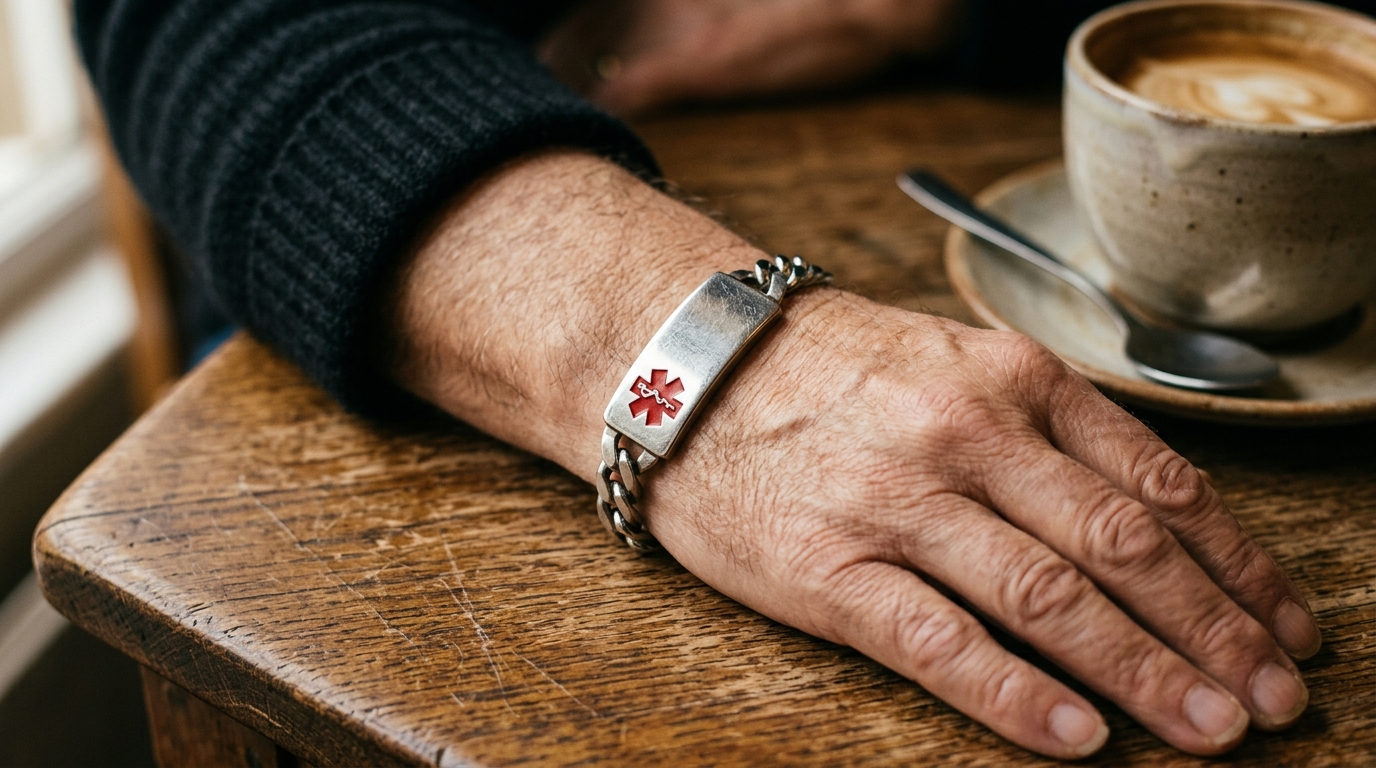
Because hemiplegic migraine mimics stroke, wearing a medical alert bracelet or carrying a card that states your diagnosis can save time and prevent unnecessary interventions in an emergency. If you're found confused with one-sided weakness and can't explain your history, first responders will (correctly) assume stroke. A medical ID helps them consider the alternative.
Track Consistently
Hemiplegic migraine is rare enough that your neurologist may not see many cases. The more detailed data you bring to appointments, the better they can tailor your treatment. Track not just attacks but also:
- Which side the weakness affected (it can alternate)
- The sequence of symptoms
- Duration of each symptom
- Medications taken and their effect
- Potential triggers in the prior 48 hours
Claru makes this tracking straightforward. Log your attacks with detailed symptom notes, and the AI helps identify trigger patterns and tracks your treatment response over time — data your neurologist can actually use.
Track your hemiplegic migraine attacks with Claru — free download
Hemiplegic Migraine vs. Stroke: Quick Comparison
| Feature | Hemiplegic Migraine | Stroke | |---|---|---| | Onset | Gradual (over minutes) | Sudden (seconds) | | Symptoms | Develop sequentially | Appear all at once | | History | Prior episodes, family history | Risk factors (age, BP, etc.) | | Duration | Hours to days, then resolves | Permanent without treatment | | Headache | Usually present | Sometimes present | | Age | Often starts in teens/20s | More common after 50 | | Recovery | Full recovery between attacks | Variable, may have lasting deficits |
Remember: This table is for education, not for self-diagnosis in the moment. New one-sided weakness = call 911. Always.

When to See a Doctor
If you've never been diagnosed with hemiplegic migraine but experience episodes of temporary one-sided weakness with headache, see a neurologist. Proper diagnosis involves:
- Detailed clinical history
- Neurological examination
- Brain MRI (to rule out structural causes)
- Possibly genetic testing (for familial type)
- Sometimes CT angiography or other vascular imaging
A correct diagnosis matters enormously because it changes which medications are safe for you and helps you avoid the repeated ER visits and unnecessary stroke protocols that many undiagnosed hemiplegic migraine patients endure.
Curious about other types of migraine aura? Our guide on early warning signs before a migraine covers the prodrome phase that often precedes attacks.
Sources: National Organization for Rare Disorders (NORD), Cleveland Clinic, American Migraine Foundation, StatPearls (NIH), The Migraine Trust, Association of Migraine Disorders.