Migraine Diary Template: Free Printable Log (PDF)
By the Claru Editorial Team
This educational article has not been independently medically reviewed. It cannot diagnose a condition or replace care from a qualified healthcare professional. Read our editorial standards.
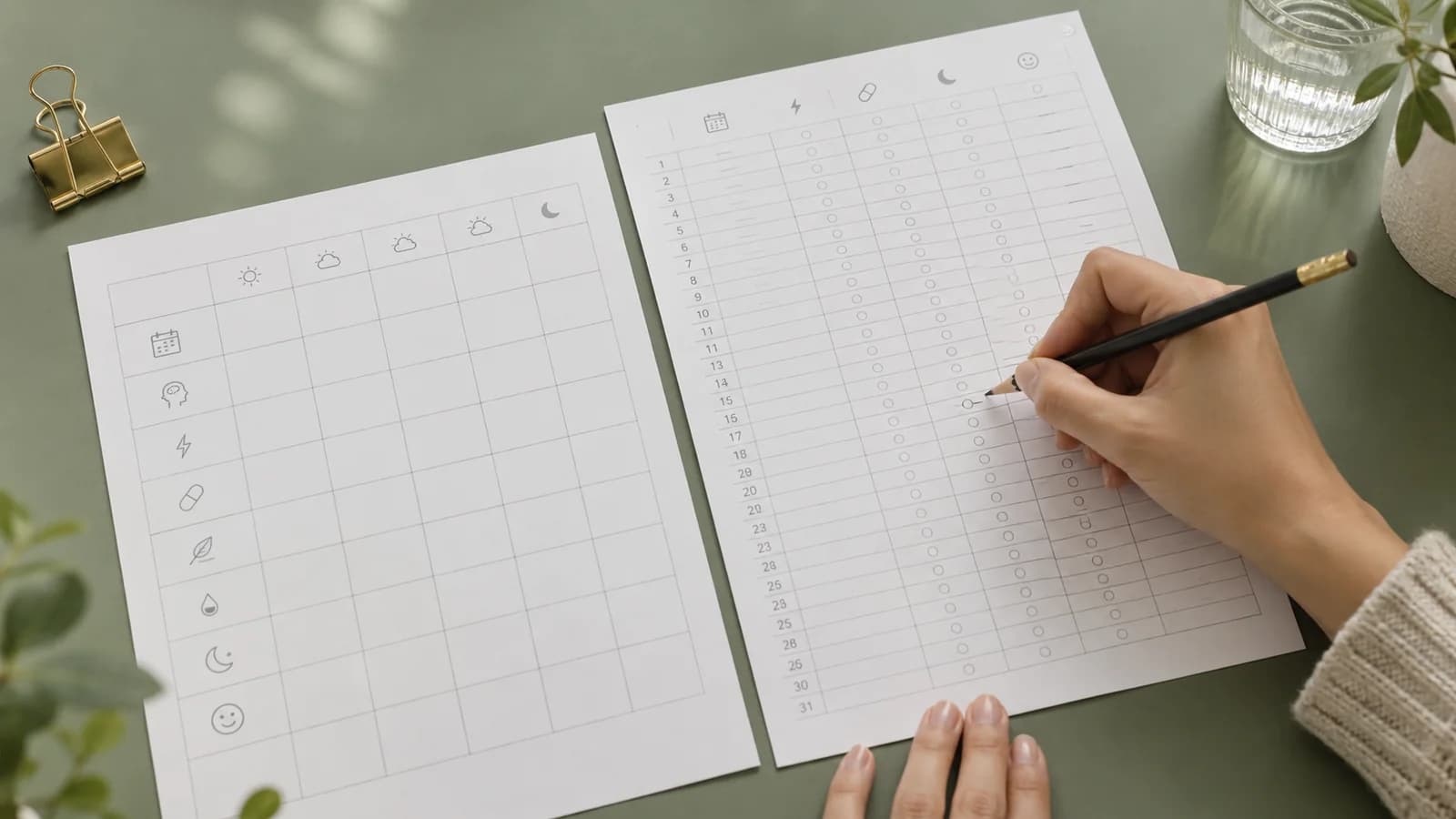
A headache or migraine diary template is most useful when it is simple enough to use on ordinary days as well as difficult ones. The free Claru templates below give you a short, repeatable place to record episodes, headache-free days, symptoms, treatment response, and possible context - without treating a single entry as proof of a trigger.
Want a different layout or set of columns? Build a custom diary with our free printable headache diary generator. The PDFs above stay available as quick static downloads.
Which headache diary template should I use?
Choose the 7-day template if you want more space for each day. It is a practical way to begin, test which details are manageable, or prepare for a near-term appointment.
Choose the 30-day template if you want a month-at-a-glance record. Its short daily rows make it easier to see frequency and leave yourself a clear prompt for what to review at the end of the month.
Neither format is medically diagnostic. A diary can help you organize observations and notice questions worth taking to a qualified clinician.
What to record in a headache diary
Start with the essentials:
- Whether you had a headache or migraine that day - or whether the day is unknown because you did not log it
- Approximate start and end time
- Severity and symptoms, such as nausea or light sensitivity
- Medication or other relief and whether it seemed helpful
- Context that feels relevant to you, such as sleep, meals, stress, cycle timing, weather, or routine changes
You do not need to document every possible factor from the first day. Consistency is more useful than a detailed tracker you stop using after a week. For a fuller explanation of these fields, read the complete headache diary guide.
Migraine diary example: one filled-in row
A completed row does not need to be long. Here is a fictional example of what one entry in the 30-day template might look like:
| Date | Headache? | Start to end | Severity (0-10) | Symptoms | Took / helped? | Notes |
|---|---|---|---|---|---|---|
| Tue 14 | Yes | 15:30 to 22:00 | 6 | Throbbing left side, light sensitivity, nausea | Usual medicine at 16:00, partly helped | Short sleep, late lunch |
| Wed 15 | No | - | - | - | - | Slept 8 h |
| Thu 16 | Unknown | - | - | - | - | Forgot to log |
The no-headache and unknown rows matter as much as the attack row. They are what let you compare later instead of only collecting bad days.
Why record no-headache and unknown days?
A list containing only attack days can make almost anything look suspicious. A short note on days without a headache gives you a comparison point. An "unknown" label is different again: it means no record was made, not that nothing happened.
This is why both templates use clear headache, no-headache, and unknown options. The distinction helps keep your notes honest and avoids turning missing information into a conclusion. See the missing comparison in a migraine trigger diary for a worked fictional example.
Paper diary, spreadsheet, or app?
Paper is a good choice when you want a low-friction record without using a screen. A spreadsheet can be useful if you enjoy sorting and reviewing data. An app may suit you if you want your diary close at hand and one place for episodes, symptoms, routines, and history.
There is no universal best format. Use the one you can return to. If you prefer a phone-based record, explore the Claru headache diary app and migraine tracker app.
Bring the record to an appointment
Before an appointment, highlight how many headache days you recorded, what treatment you used, what changed from your usual pattern, and any questions you want to ask. The migraine doctor appointment checklist can help you organize that conversation.
If you develop a sudden severe headache, headache after an injury, weakness, confusion, fever with stiff neck, vision loss, or a pattern that is new or significantly different for you, seek urgent medical care rather than relying on a diary alone.
Sources and further reading
Frequently asked questions
- Is there a free printable migraine diary template?
- Yes. The 7-day and 30-day PDF templates on this page are free to download and print. If you want different columns, the free printable headache diary generator builds a custom PDF in your browser.
- What should I write in a migraine log?
- Start with the date, start and end time, severity, symptoms such as nausea or light sensitivity, what you took and whether it helped, and any context you noticed, such as sleep, meals, stress or weather. Mark headache-free days too.
- How long should I keep a migraine diary before seeing a doctor?
- A few weeks of entries, ideally one to two months, gives a clearer picture because it shows how often attacks happen and how you use medication. Do not wait for a full diary if your headaches are new, severe or changing.
- Is a paper headache diary better than an app?
- Neither is better for everyone. Paper works well if you want a quick record without a screen. An app can be easier to keep with you and to summarize. The best diary is the one you keep filling in.