Dehydration Headache: Signs, Relief & Prevention

Medical note: This guide is educational and cannot diagnose dehydration, migraine, or another medical condition. Seek urgent care for confusion, fainting, severe weakness, persistent vomiting, signs of heat illness, or a sudden severe headache.
A dehydration headache happens when your body does not have enough fluid for normal function. For some people it feels like a dull pressure. For others it can trigger or worsen a migraine attack, especially when dehydration stacks with heat, skipped meals, poor sleep, alcohol, or caffeine changes.
Cleveland Clinic notes that dehydration can cause headaches and that dehydration headache often improves after fluids and rest. Mayo Clinic and MedlinePlus list symptoms such as thirst, dark urine, reduced urination, tiredness, dizziness, and confusion as signs of dehydration.
The tricky part: dehydration is not always the only cause. It may be the trigger, the amplifier, or just one piece of a bigger migraine pattern.
Signs Your Headache May Be From Dehydration
Dehydration is more likely if your headache comes with:
- Thirst or dry mouth
- Dark yellow urine
- Peeing less than usual
- Dizziness or lightheadedness
- Fatigue or weakness
- Dry lips or dry skin
- Muscle cramps
- Headache after sweating, heat, alcohol, vomiting, diarrhea, or not drinking much
- Improvement after fluids, food, shade, and rest
If you have nausea with the headache, compare patterns with our headache and nausea guide. If headaches happen when you wake up, read why you wake up with a headache.
Dehydration Headache vs. Migraine
Dehydration can cause a headache on its own, but it can also trigger migraine in people who are prone to migraine.
| Pattern | More like dehydration headache | More like migraine triggered by dehydration | |---|---|---| | Pain | Dull or aching | Throbbing or pulsing | | Location | Often whole head | Often one-sided, but can vary | | Other symptoms | Thirst, dark urine, dizziness | Nausea, light sensitivity, sound sensitivity, aura | | Movement | May feel worse with activity | Often clearly worse with movement | | Relief | Improves with fluids and rest | May need your migraine plan plus hydration |
The American Migraine Foundation says dehydration is a commonly reported migraine trigger. That does not mean dehydration "causes migraine" in every person. It means fluid balance is one factor worth tracking, especially if attacks cluster after hot days, travel, workouts, alcohol, or illness.
What to Do for a Dehydration Headache
1. Start with steady fluids
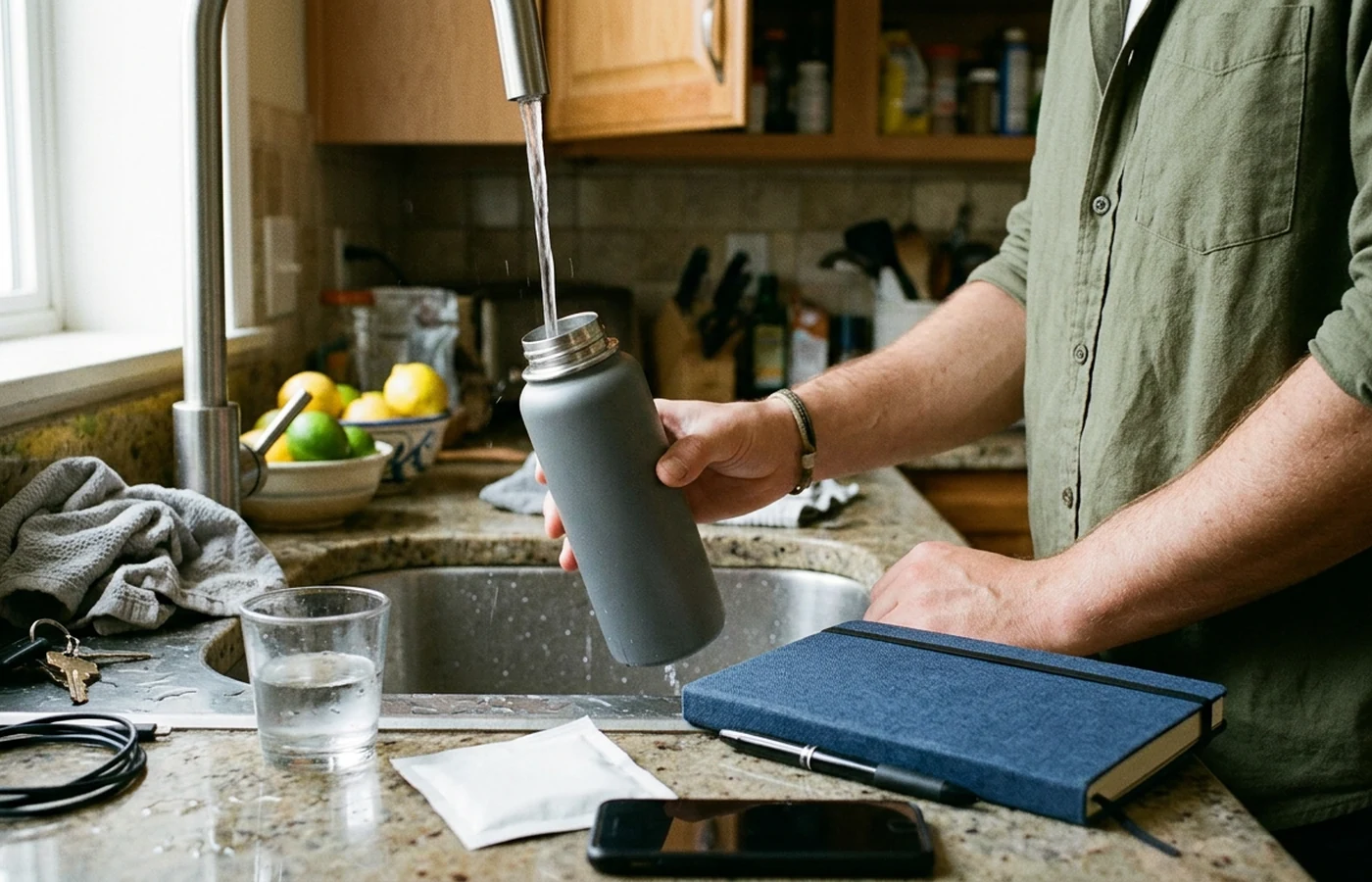
Sip water consistently. If your stomach is sensitive, small sips every few minutes are usually easier than chugging a large bottle at once.
2. Add electrolytes when fluid loss is higher
Plain water is often fine for mild dehydration. Electrolytes matter more if you have been sweating heavily, vomiting, having diarrhea, drinking alcohol, or spending time in heat.
Mayo Clinic notes that dehydration treatment involves replacing lost fluids and electrolytes, with the best approach depending on age, severity, and cause.
3. Rest somewhere cool
If heat or sun exposure is involved, move to a cool, shaded place. Resting gives your body a chance to recover while fluids absorb.
4. Eat if you skipped meals
Low blood sugar and dehydration often travel together. If you have not eaten, try something simple with carbohydrates and protein: toast with eggs, yogurt and fruit, soup, rice, crackers with cheese, or a banana with peanut butter.
5. Use pain relief carefully
Over-the-counter pain relievers can help some dehydration headaches, but frequent use can create medication overuse headache. If you need pain medication often, talk with a clinician.
When to Get Medical Help
Seek urgent care if dehydration symptoms include:
- Confusion
- Fainting
- Severe weakness
- Very little or no urination
- Persistent vomiting or diarrhea
- Signs of heatstroke, such as very high body temperature or altered mental state
- Headache after heat exposure that is severe or worsening
- Sudden "worst headache of my life"
See a doctor soon if your headache does not improve after fluids and rest, keeps coming back, or is paired with unexplained weight loss, excessive thirst, or frequent urination. Those patterns can point to something beyond simple dehydration.
Prevention: Make Hydration Trackable
"Drink more water" is technically true and practically useless if you do not know when dehydration is part of your headache pattern.
Track:
- How much you drank
- Urine color or how often you peed
- Heat exposure
- Exercise and sweating
- Alcohol
- Caffeine changes
- Vomiting, diarrhea, or illness
- Sleep and skipped meals
- Headache start time, severity, and symptoms
After a few weeks, you may see a clear pattern: headaches after long errands in heat, migraines the morning after wine, attacks after workouts without electrolytes, or pain on days when caffeine replaces water.
If caffeine is part of the pattern, use our caffeine headache calculator. If you want to track all factors together, Claru keeps hydration, sleep, weather, medication, cycle, and trigger notes in one place.
Track headache triggers with Claru
FAQ
What does a dehydration headache feel like?
It often feels like a dull ache or pressure and may come with thirst, dry mouth, dark urine, dizziness, fatigue, or reduced urination. In people with migraine, dehydration may trigger a more migraine-like attack with nausea or light sensitivity.
How long does a dehydration headache take to go away?
Mild dehydration headaches may improve within a few hours after fluids, rest, and cooling down. If it does not improve or symptoms are severe, get medical advice.
Is water enough, or do I need electrolytes?
Water is often enough for mild dehydration. Electrolytes are more useful after heavy sweating, heat exposure, vomiting, diarrhea, alcohol, or prolonged activity.
Can dehydration trigger migraine?
Yes, dehydration is a commonly reported migraine trigger. It may not be the only factor, so track it alongside sleep, meals, stress, caffeine, weather, and cycle changes.
Can drinking too much water be a problem?
Yes. Do not force extreme amounts of water. If you feel very unwell, confused, faint, or unable to keep fluids down, seek medical care rather than trying to fix it alone.
The Bottom Line
A dehydration headache is often fixable with fluids, rest, cooling down, and electrolytes when needed. But if you live with migraine, dehydration may be one trigger in a larger pattern. Track the context around each attack so you can tell whether hydration is the main cause, a contributing factor, or a distraction from something else.
Sources: Cleveland Clinic dehydration headache, Cleveland Clinic dehydration, Mayo Clinic dehydration symptoms, Mayo Clinic dehydration treatment, MedlinePlus dehydration, American Migraine Foundation top migraine triggers.