The Complete Headache Diary Guide: What to Track and Why It Works
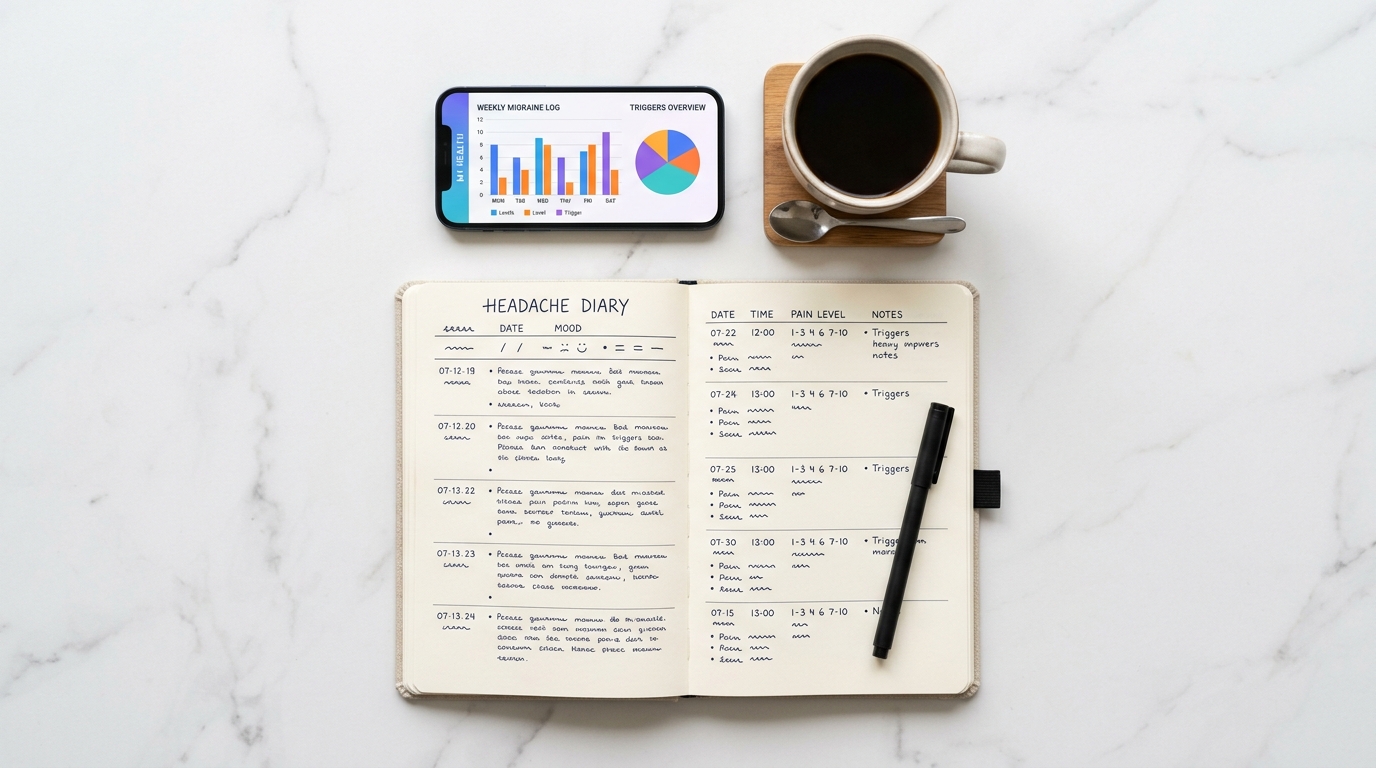
Your doctor asks: "How often do you get headaches? What triggers them? How long do they last?"
And you sit there, trying to remember. "Um... maybe a few times a month? I think stress is a trigger? They last... a while?"
Vague answers get vague treatment. Specific data gets specific solutions. That's why headache diaries exist — and why the American Migraine Foundation, the National Headache Foundation, and virtually every headache specialist in the world recommends them.
But most people who start a headache diary quit within two weeks. Not because it doesn't work — but because they don't know what to track, they try to track too much at once, or their system is too tedious to maintain.
Here's how to build a headache diary that's actually sustainable and that produces the insights you need.
Why a Headache Diary Actually Works
It's not just about remembering your headaches. It's about seeing patterns that are invisible without data.
The human brain is terrible at identifying its own headache patterns. You remember the dramatic attacks and forget the mild ones. You blame the food you ate right before the headache and miss the trigger that happened 24 hours earlier. You assume stress is the cause because it "makes sense" — but you've never actually verified the correlation.
A headache diary bypasses these cognitive biases. When you have 4-8 weeks of objective data, patterns emerge that surprise even experienced neurologists:
- You might discover that your "random" headaches always happen on the day after you sleep less than 6 hours
- You might find that weather pressure changes, not stress, are your real primary trigger
- You might realize that your headaches cluster around the same point in your menstrual cycle every month
- You might see that the medication you thought was helping is barely making a difference
These insights change treatment decisions. And they're impossible to get without consistent tracking.
What to Track: The Essentials
Don't try to track everything on day one. Start with these core elements and add more as the habit solidifies.
Tier 1: Start Here (Takes 30 Seconds Per Entry)
Date and time the headache started. Not "sometime this morning" — the actual time, even if approximate. Timing patterns are one of the most revealing data points.
Pain severity (1-10 scale). Be honest and consistent with your scale. A 4/10 that lets you work is different from a 7/10 that puts you in bed. Don't inflate or deflate your numbers.
How long it lasted. Note when the pain ended (or when you went to sleep with it). Duration helps distinguish headache types: tension headaches last 30 minutes to a few days; migraines last 4-72 hours; cluster headaches last 15 minutes to 3 hours.
Medication taken and whether it helped. What did you take, what dose, at what time, and did it work? This is critical data for your doctor.
Tier 2: Add After Week 1
Pain location. Where exactly? One side or both? Behind the eye? Forehead? Base of skull? Does it move during the attack? Pain location helps identify headache type.
Pain quality. Throbbing? Pressing? Stabbing? Burning? Dull? Each quality is associated with different headache types.
Associated symptoms. Check any that apply: nausea, vomiting, light sensitivity, sound sensitivity, smell sensitivity, neck stiffness, nasal congestion, teary eye, visual disturbances.
Tier 3: Add After Week 2
Potential triggers from the prior 24 hours:
- Sleep: how many hours? Quality? Wake-ups?
- Food and drink: anything unusual? Alcohol? Skipped meals? Specific trigger foods?
- Stress level (1-5 scale)
- Physical activity: type and intensity
- Weather changes: check barometric pressure data for your area
- For women: menstrual cycle day
- Screen time: more than usual?
- Caffeine: how much? When? Different from usual?
Tier 4: Advanced Tracking
Prodrome symptoms. Did you notice any early warning signs before the headache? Mood changes, food cravings, yawning, neck stiffness?
Aura symptoms. Visual disturbances, tingling, speech difficulties? How long did they last?
Functional impact. Did you miss work? Cancel plans? Go to bed early? Need to leave a social situation? Documenting functional impact helps your doctor assess severity and justifies more aggressive treatment when needed.
What helped (non-medication). Cold compress? Dark room? Pressure points? Sleep? Caffeine? Building your personal "what works" database is just as valuable as identifying triggers.
How Long Before Patterns Appear
Most headache specialists recommend tracking for at least 4-8 weeks before trying to draw conclusions. Here's why:
2 weeks: You'll start to see basic frequency patterns. How many headaches per week? What days are most common?
4 weeks: If you're a woman tracking your menstrual cycle, one full cycle lets you see hormonal patterns. Weather correlations also start becoming visible.
8 weeks: This is the sweet spot. You'll have enough data points to identify genuine trigger correlations vs. coincidences. Your doctor can confidently use this data to guide treatment decisions.
3+ months: Long-term tracking reveals seasonal patterns, medication effectiveness trends, and whether lifestyle changes are actually reducing your headache frequency.
The critical thing: don't skip the non-headache days. Logging "no headache today" along with your sleep, stress, and food data is just as important as logging the attacks. You need the comparison — what was different about the days you didn't get headaches?
Paper Diary vs. App: Which Works Better?
Both work. The one you'll actually use consistently is the right one.
Paper Diary
Pros: No screen required during a headache (screens + migraine = misery). Nothing to charge. Simple and tangible.
Cons: Hard to spot patterns without manually cross-referencing entries. Easy to forget at home. Difficult to share with your doctor in a useful format. No automated weather data.
Spreadsheet
Pros: Sortable and filterable. Can create charts. Easy to share digitally.
Cons: Requires a computer to update. Tedious to maintain. Most people abandon spreadsheets quickly because opening Excel to log a headache feels like extra work.
Headache Tracking App
If you want an app-based diary that keeps episodes, symptoms, routines, and relief in one place, see how the Claru headache diary app is designed for day-to-day tracking.
Pros: Always with you (phone). Fast to log (30 seconds vs. 2-3 minutes for paper). Automatic weather data integration. AI-powered pattern detection. Easy to share reports with doctors.
Cons: Using your phone during a severe migraine can be hard (screen brightness, cognitive difficulty).
The Best Approach
Start with whatever gets you tracking today. If paper works, use paper. If you prefer your phone, use an app.
But if you're serious about finding your trigger patterns, an app has a significant advantage: it can analyze correlations across hundreds of data points automatically. Spotting that your headaches correlate with barometric pressure drops of 8+ hPa that coincide with fewer than 6.5 hours of sleep isn't something you'll find by scanning a paper journal.
This is exactly what Claru is built for. Log your headaches in under 30 seconds, and the AI cross-references your data with weather, sleep, food, stress, and cycle information to surface patterns you'd never find manually. After 4-6 weeks, it can tell you your top triggers with confidence scores.

What Your Doctor Wants to See
When you bring your headache diary to an appointment, your doctor is looking for specific things:
Headache frequency and trend. Are headaches becoming more or less frequent? A clear number ("14 headache days last month") is infinitely more useful than "I get headaches pretty often."
Medication use. How many days per month are you taking acute medication? More than 10-15 days suggests medication overuse headache risk.
Trigger patterns. Can you identify 2-3 clear triggers? This guides both lifestyle modifications and preventive treatment choices.
Treatment response. When you take medication, does it work? How quickly? Do you need a second dose? This helps your doctor decide whether to stay with current treatment or try something new.
Functional impact. How many work days missed? How many social events canceled? This helps justify insurance coverage for specialist referrals and advanced treatments like CGRP antibodies or Botox.
Pro tip: If you're using Claru, you can export a summary report before your appointment. It distills weeks of data into a clear overview that saves your doctor time and gets you better care.
Common Diary Mistakes (and How to Avoid Them)
Mistake 1: Tracking Too Much Too Soon
Starting with a 15-field diary on day one is a recipe for burnout. Start with Tier 1 (date, time, severity, medication). Add more fields only after the basic habit is solid.
Mistake 2: Only Logging Headache Days
If you only track when you have a headache, you can't compare headache days to non-headache days. You need both sides of the equation to find patterns.
Mistake 3: Logging Hours After the Headache
Memory fades fast. Log as close to real-time as possible. The medication you took, the severity rating, the start time — these details get fuzzy within hours. A quick 30-second log during or right after a headache beats a detailed entry you try to reconstruct the next morning.
Mistake 4: Looking for One Silver-Bullet Trigger
Most people have multiple triggers that interact. You might tolerate aged cheese fine most days, but aged cheese + poor sleep + your period = guaranteed migraine. This is the trigger stacking model, and it's why single-variable thinking ("I just need to find my one trigger") rarely tells the whole story.
Mistake 5: Quitting After Two Weeks
Two weeks isn't enough data. Patterns need time to emerge, especially for triggers that don't happen daily (like menstrual triggers or weather triggers). Commit to at least 4 weeks before evaluating whether tracking is "working."
A Sample Day in a Headache Diary
Here's what a useful daily entry looks like:
No-headache day:
April 6 — No headache. Slept 7.5 hrs (good quality). 2 cups coffee by noon. Lunch at 12:30. 45 min walk. Stress: 2/5. Weather: stable, 1015 hPa. Cycle day 18.
Headache day:
April 7 — Headache started 2 PM, right temple extending behind right eye. Throbbing, 6/10. Took 400mg ibuprofen at 2:15 — reduced to 3/10 by 3 PM. Nausea, mild light sensitivity. Slept 5.5 hrs last night (woke up twice). 3 cups coffee. Skipped lunch. Stress: 4/5. Weather: pressure dropped 12 hPa since yesterday. Cycle day 19.
Look at those two entries side by side. The headache day had less sleep, more caffeine, a skipped meal, higher stress, AND a pressure drop. Multiple triggers stacked up. That's the kind of insight a diary produces.
Start Tracking Today
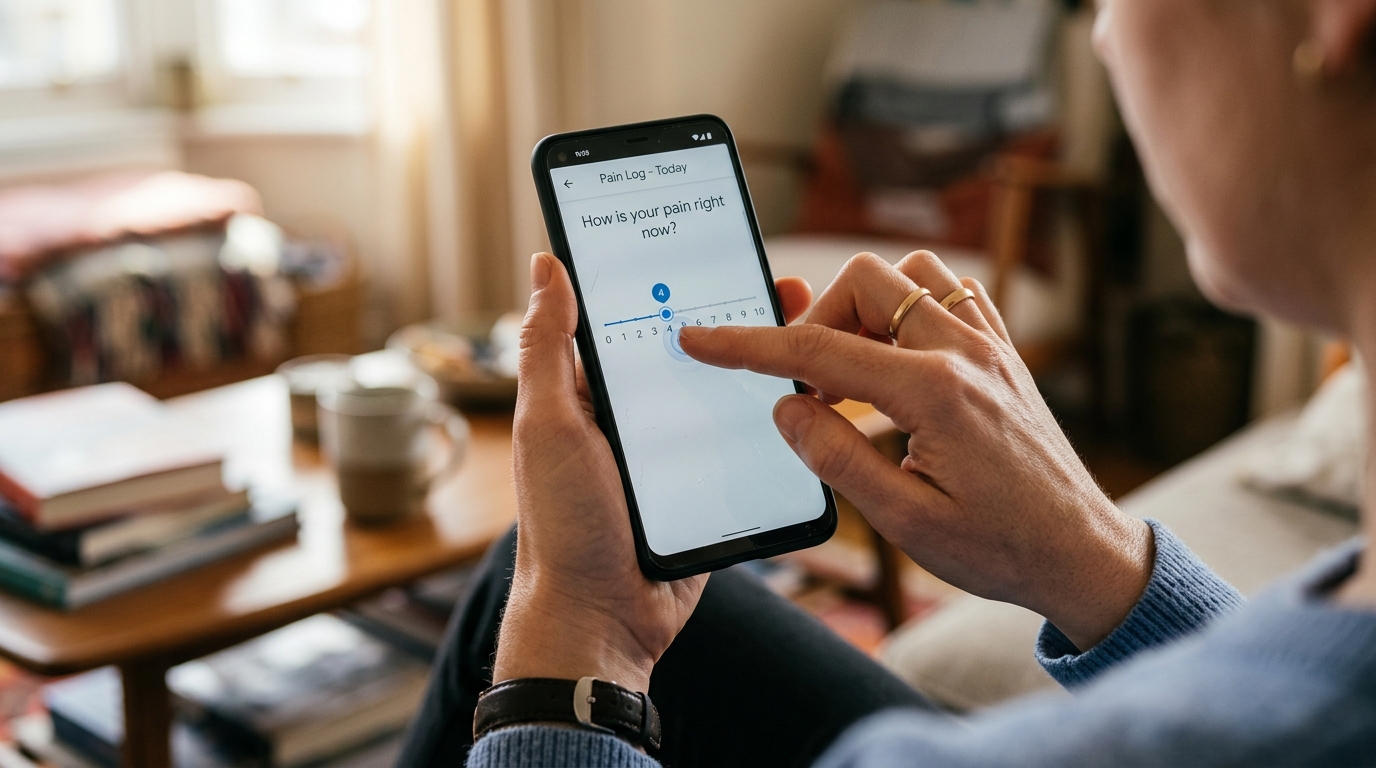
You don't need a perfect system. You need a consistent one. Grab a notebook, open a note on your phone, or download Claru — and start with three simple fields: when, how bad, and what you took.
After a month, you'll know more about your headaches than most people learn in years of suffering. And when you bring that data to your doctor, you'll be speaking their language.
Download Claru and start your headache diary — it's free
Sources: American Migraine Foundation, National Headache Foundation, The Migraine Trust, Association of Migraine Disorders, Migraine Canada, Mayo Clinic.